The Conversation
How Charlotte and I finally talked about the canyon, and what neither of us said out loud

Previously on Between Corners:
Doug writes the letter. It sits on his desk like a live wire. To distract himself — or to impress Charlotte — he takes her to the Grand Canyon, his sacred ground.
The drive back to Austin took two long days, and most of it passed in a strange, padded quiet. Not icy, not hostile — just careful. We talked about gas stations, weather, the merits of roadside kolaches. But we didn’t talk about the canyon. We didn’t talk about the bonk, or the rain, or the moment she looked at me like I’d suddenly become someone she didn’t quite trust. And we definitely didn’t sing any duets.
There are silences that feel companionable. This wasn’t one of them.
When we finally rolled into town, she gathered her things from the Airstream’s tiny closet, gave me a distracted kiss on the cheek, and said she needed a shower and some sleep. That was all.
I didn’t want to push. But I didn’t want to leave the wrong ending hanging in the air either.
For a day or two, nothing.
Then I texted her.
Coffee?
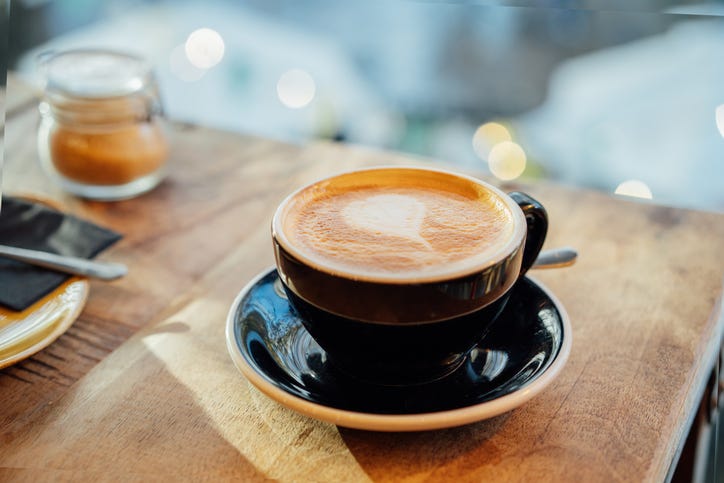
She said yes, and we met at a place near Zilker. She was already outside when I arrived, hands wrapped around a mug as if she needed its warmth more than the caffeine.
Before I could sit down, I could tell she’d been waiting to say something.
I got my coffee and sat. She started.
She apologized for the hike going wrong. For not being fitter. For slowing me down. For “ruining” the day.
I let her go for a minute, no more. Then I said, “Stop.”
She looked up, a little startled.
“This isn’t on you,” I said. “I pushed too hard. I tried to force the canyon on you — force my moment onto your experience. I wanted you to feel what I felt the first time. That’s not how this works. Not the canyon. Not life. Not us.”
Her expression shifted. A small softening.
I kept going.
“I should’ve been paying attention to you, not the perfect storyline in my head. I knew better. I’ve literally helped strangers avoid the exact mistake I made with you. And yet I did it anyway, and you ended up paying for it.”
She leaned back slightly, letting the words settle. The wind lifted a strand of hair across her cheek, and she didn’t bother brushing it aside. Something about that made her look younger and older at the same time.
“That means a lot,” she said.
We stayed for an hour, talking about the drive home, the weather at Cedar Ridge, why switchbacks trick people, her blister, my stubbornness. Nothing dramatic. But some of the anger seemed to drain from the space between us, the way desert air loses its energy after a storm.
Not all the way. But enough.
When we finally stood to leave, she surprised me by stepping in and giving me a long, steady hug. Not romantic. Not apologetic. Just human.
“We’re okay,” she said into my shoulder.
And for the first time in days, I believed her.
Walking back to my truck, I realized the canyon hadn’t betrayed me. Charlotte hadn’t either. What happened was simpler and more disappointing: I’d betrayed my own expertise, my own instincts, because I was trying to choreograph life. As if real experience could be recreated by fidelity to memory. As if awe were transferable.
Maybe the canyon was giving me another lesson. Or maybe Charlotte was the one who delivered it.
Either way, this time, I heard it.