The Baton
People are more connected than they realize

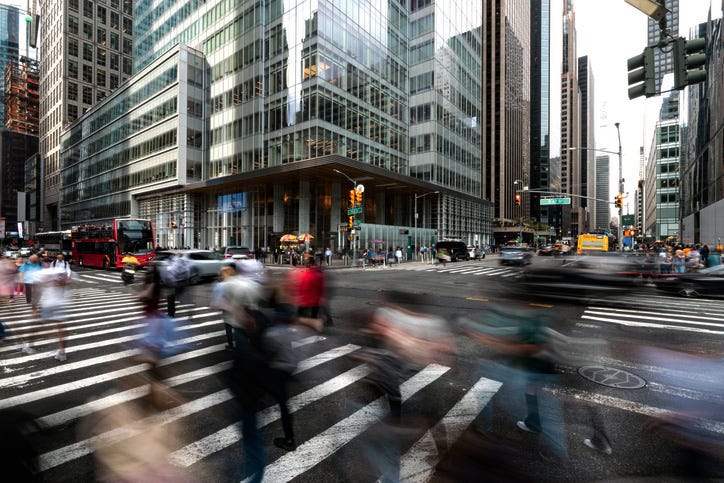
This chapter is part of the serialized novel Between Corners. If you’re new, start here.
“Hey Christopher,” somebody said to me as I walked into the Forest Service’s regional headquarters on Portland’s Third Avenue. “How was Austin?”
“Austin was great,” I replied. “Met some fantastic people.”
It was the Monday after I’d flown home. I got some coffee, then checked in with my boss. Then to my office and a backlog of email and Teams messages. My mobile phone was on the desk. I picked it up. I remembered what I had asked her when I left the other night. Her breath in my ear.
“I will,” she had said.
Doug was looking at something else, I was pretty sure. Probably still thinking about the hamburgers he charred. That was honestly kind of funny. And it got him out of the house for an hour.
I tapped a short message.
“I’m home. How are you?”
Molly yelled from the paddock. “Charlotte – Julie’s here.” My first client of the day. The lesson today was learning to turn a horse, and Molly already had saddled up Monarch. He was a big horse, but mannerly. He listened to leg, seat, and rein cues without delay. In a few minutes I had Julie in the saddle and watched with pleasure as Monarch responded smartly to her cues. Dust came up from his hooves.
When I finished with Julie, I walked inside to get a drink of water. It was a hot morning. I also checked my phone. I put it on silent while I was with clients so it wouldn’t disturb the work. Horses were surprisingly sensitive to the electronic chirps a phone makes – I’d seen their big ears rotate in a half circle trying to pick up the source of a text chime.
I’d received three texts. A client’s mom. An order was in at Dover Saddlery.
And Christopher. He was home in Portland.
I texted back. “I’m fine. At work.”
A moment.
“Me too. Got time for coffee?”
I laughed at that. “Sorry,” I said. “I don’t quite have time to catch a flight.”
“A pity.”
I would have liked to. I recalled our time at Café 508. He held my arm when he looked at the scar, his thumb resting on the still-red line.
Then I heard a car door slam. Molly hollered a greeting at someone.
“A new client just got here. Gotta run. Text me later?”
“Of course.”
Outside I met my new client, 14-year-old Eva. Her parents said she was struggling with social media and peer pressure. I got it. She was tall and gawky. But I also could see she was going to be a beauty – in a few years. Her parents had enrolled her in an effort to turn down the noise in her head.
Monarch was back in his stall. He was the wrong horse. Instead, I took Daisy out of her stall – my calmest horse. I worked on the basics with Eva, things like learning how to brush Daisy, fit the halter on her, put on a saddle blanket and saddle. Eva then simply walked Daisy around the paddock.
Sometimes that was all it took.
By four I was finished, and on the drive home I stopped at Central Market. I took out the grocery list: Tenderloins, all-purpose flour, cantaloupe, tonic. For once I could read Douglas’s handwriting. I once bought cheese when he had written “chicken.”
That guy.
At home I found Douglas working outside the barn. A week earlier, he had taken on the job of replacing a dented panel on a 2005 Airstream Bambi owned by an architect in Dallas. It was becoming complicated. After putting away the groceries, I walked outside to check on progress. I heard the whirring of a cordless drill. I poked my head inside the door. “How’s it going?” I asked. The drill stopped.
“OK, I think,” Douglas said. “I just about have the last of the cabinets out. Then I can remove the interior wall on the inside of the dent.” He tugged at the cabinet. It wiggled but didn’t come loose. He tugged again. “There’s always a hidden rivet,” he muttered.
“Hey, grab that tool down there for me.” He pointed at a long power tool with a serrated blade on one end.
“You sure?”
“Yes.”
I pointed at the tool. “This?” I asked skeptically.
“Yeah. Here – turn it on and hold the blade on that rivet.”
The tool was heavy – and loud once I turned it on, a hard vibration. I carefully pushed the blade against the rivet. It caught and made the tool jump in my hand. I re-set my grip and put the blade back to work. Then the rivet snapped. The cabinet wobbled, then came free.
“Whew – thanks!” Douglas said.
“You’re welcome,” I said, shutting the tool off and putting it down. “I bought some steaks. I’ll make dinner.”
It was 3 Portland time, and I had just walked back into my office after a meeting about road construction on the Willamette National Forest.
I saw the last text from Charlotte, about the new client. “How did it go?” I wrote back.
Waited. Nothing.
“Text when you can. Always good to hear from you.”
I put the phone in my pocket.
The rest of the week was the usual: Meetings, calls, budget crises. One day I drove to the Mount Hood National Forest, where the recreation ranger was contemplating enlarging a trailhead. Portland was full of 30-somethings who wanted the Northwest lifestyle. That meant hiking.
On a Monday afternoon I poked my head into the office of Emilia Clark, a fire specialist who had recently moved here from Denver. We’d had hallway conversations and an occasional coffee for three weeks, starting not long after she arrived.
“Hey there,” I said. “How’s it going?”
Emilia was probably my age – dark blonde hair, tied back with a black scrunchie. Blue eyes, a face with nice cheekbones. Appealing figure, even when covered in Forest Service green.
She looked up from her computer and made an exasperated sound.
“Ugh, this is complicated. I’m working on a new grazing directive for Oregon forests. The goal is to reduce the risk of wildfires. But I’m afraid it could have a much wider impact.”
“Meaning, not just in Oregon?”
“Exactly. Anywhere there is grazing on a national forest.”
I took that in.
“That’s every state in the West.”
“Probably.”
“Well, better you than me,” I said. “I prefer potholes to angry ranchers.”
“Gotta send this out,” she said, turning back to her laptop. “Wish me luck.”
“Good luck,” I said, and closed the door.
On Friday Tom Butler called me unexpectedly. He was a rancher I knew in Oklahoma. I often helped him with business stuff.
“Tom!” I said. “What’s up?”
“Well, Doug, I don’t know exactly,” he said in his raspy baritone. “Have you heard about these new grazing regs the Forest Service pushed out earlier this week?”
He ran a few hundred head of cattle on the Ouachita National Forest in western Oklahoma.
“No – not a thing.”
“New regs to reduce fires. But they’re out of Oregon – entirely different fire regime. It’s gonna cost me fifty thousand bucks a year, Doug.”
“Jesus. For fire management?”
“That’s what they say. This is nuts.”
“It is nuts,” I agreed. “When do these go into effect?”
“Not sure. Maybe in the fall.”
I let out a sigh.
“Anybody you know you can call?” I asked him.
“I tried my Forest Service guy. He’s not getting back to me.”
His impatience was easy to pick up.
“I know someone in the Portland office,” I said. “Let me see what I can find out. And Tom – I’ll come up and see you in a week or two. I’m due for a visit there anyway.”
“Thanks, Doug. I appreciate it.”
“Not a problem.”
It was a problem. Now I had to call that guy in Portland.
Back outside I went to work refastening the interior cabinets. I had to use a long Phillips-head screwdriver with a magnetic tip to wiggle a screw into position so I could lean on the crooked cabinet and just get the holes to align.
I stuck the screwdriver in my back pocket.
Friday at 4 I stopped by to check in with Emilia again.
“Any blowback yet?”
“Not yet. Any minute now, I’m sure.”
Something outside caught my eye, then I looked back at her. “Can I buy you a drink? Maybe even some dinner? If you’re free…”
“That sounds lovely. I have street clothes in the closet.”
Thirty minutes later she had changed into a cream-colored T-shirt that showed some collarbone, faded denims with ripped knees, a white blazer. And she had let down her hair.
“Well, look at you,” I said. “I had no idea you cleaned up this well!”
She laughed.
She also looked like Charlotte. A lot.
The sun was going down behind the West Hills when we left the office. One of those pleasant evenings people don’t realize Portland has. Soft air, soft light. We walked to Andina – Peruvian food. Then Powell’s City of Books. She bought a copy of Kristin Hannah’s “The Women.” A scene right out of “Portlandia,” I thought.
As we walked out, I touched her hand. She touched back.
“Emilia,” I said. “I don’t live far from here.”
Emilia looked at me. “OK,” she said.
Twenty minutes later I unlocked the door, and we stepped into a three-story Victorian house, gray and red, built around 1888. The main floor was mine. About 1100 square feet, with a living room, dining room, spacious kitchen for the few times I tried to cook, a bathroom. Even a bidet.
Emilia walked in ahead of me and was looking around. “Very nice,” she said. “I like the ‘guy casual’ aesthetic.”
I stepped behind her and put my arms around her waist. She leaned back.
“So, you’re an interior decorator too,” I said.
“Not really.” I gave her neck a little nuzzle, and with my hands ran down the fabric of her blazer and under it. Felt the junction of the denims and the soft T. I tugged some at the T. I felt her tense just slightly. My hands stopped.
“Easy there,” Emilia said.
I put my lips near her ear, noticed her silver disc earring. “Easy is no fun,” I said. And tugged at the T-shirt again.
“But sometimes it’s better,” she said.
But then she turned to me and kissed me. In another minute, my hand was running across the skin of her back, and she was arching into me a little.
“Oh,” she said. “Someone is pretty excited already.”
The room softened.
At 7 in the morning, I awoke and looked across the bed. Emilia was sleeping. Her clothes were draped across a chair in the corner.
I rolled onto my back and picked my phone off the nightstand.
“Hey,” I typed. “What are you up to?”
Emilia shifted.
I slid the phone under the sheets.
My phone chimed as I stood in the trailer with yet another tool in my hand.
“Do you need to get that?” Doug asked from outside the trailer. He was holding a new aluminum panel against the trailer framing.
“It’s nothing,” I said. I gripped the tool. A bucking bar. I was sweating – the sun was baking the aluminum trailer and I was inside.
“Ready?” Doug asked.
“Ready,” I said. My job was to hold the bucking bar against the base of a rivet Douglas had just inserted into a drilled hole.
“Riveting,” he said. From the other side of the trailer the air hammer thumped rapidly against the bar, then stopped.
“Dammit,” he said tersely.
“What?”
“You didn’t have the bar flush. The rivet is cockeyed. I’ll need to drill it out and start over.”
“Sorry,” I said.
Exasperated sigh.
He came inside.
“Show me how you were holding the bar.”
I did, placing the oddly shaped bar against the hole he had inserted the rivet into. “No – like this.” He took my hand and corrected it.
“Why don’t you get us some coffee and we’ll try again?”
Something went a little cold inside me.
“I have a better idea,” I said.
“What?”
“Find someone else to help.”
Douglas looked startled. I turned and walked toward the house.
“Charlotte!” he called after me.
Inside, I turned on the espresso machine. A few seconds later Douglas poked his head through the mudroom door. “Hey hon – I, uh, I apologize. That isn’t an easy job, I know. So…so Jeff is going to come help me with it.”
“OK – good,” I said, still a little put out. Jeff was a super-nice guy. Sandy blonde hair, friendly face. Slightly goofy personality. In a few minutes I saw his maroon Ram pull up next to the trailer.
An impulse came to me. I turned the espresso machine back on, pulled a shot, then steamed milk. I filled a mug, put a peanut butter cookie on a plate, and carried them out to the trailer.
“Hey Jeff,” I said. “Latte?”
“Oh – thanks!” he said.
I felt a twinge of remorse. That was mean of me. Then I looked at Douglas. He was making a face I couldn’t quite place. Almost amused. Like he got the joke.
I was smiling at that as I walked back to the house. Inside, I pulled out my phone. Noticed the earlier text from Christopher. “Always good to hear from you.” My face felt warm.
Then the phone rang. Margaret.
“Hey there,” I said. “What’s up?”
“Hey there,” I heard Charlotte say brightly when she answered. “What’s up?”
“Not much. I’m not far away. Come by and see you?”
“Of course – the espresso machine is hot.”
Five minutes later I parked in her courtyard. When I got out of the Escalade I could hear power tools. And two male voices – there was a Ram I didn’t recognize parked next to the Airstream.
Doug stuck his head out of the trailer and waved. I waved back, then walked to the house and opened the door to the kitchen.
“Hello friend,” Charlotte said. “How are you?”
“Pretty good,” I said.
She looked up. “Pretty good?”
I sat at the kitchen table. “Yeah. We’re about to finalize.”
The divorce. From Barrett.
“Oh!” Charlotte said. “I didn’t realize you were that close.”
“We kind of sped things up.”
Charlotte drew a shot from the espresso machine, steam hissing. “I’m sorry,” she said. “Whether or not this is what you needed to do, that can’t be any fun.”
“No,” I said. “It’s not. In fact, it sucks.”
“What does Carter think?”
“He was probably the least surprised of anyone.”
She laughed a little. “Yeah. He probably saw a lot more than you think he did. Do you take sugar?”
“No thanks.”
She handed me a warm mug.
“You’re quite the barista,” I said, taking it.
“Thanks. Douglas likes to stay caffeinated.”
I chuckled.
“All well on that front?”
“With Douglas?”
“Yes.”
She sipped her latte and toyed with a stray lock of hair.
“Oh – fine. Not having a great morning. He asked me to help him and I did something wrong. He got a little annoyed.”
“Men should never ask women to help with tools.”
“Probably not, although usually I enjoy it.”
Charlotte gave me a sly smile. “But I got even.”
This was irresistible. “Spill it. How?”
“His friend Jeff is helping instead of me. So, I took Jeff a latte. And a cookie.”
I laughed. “Oh, you are bad! Did Doug notice?”
“Oh yeah. I think he thought it was funny.”
She looked away and tugged on a strand of hair.
“After that, I got a text. From him.”
Him. “Christopher?”
“Yeah.”
“Have there been others?”
She paused.
I set my mug down and tried to give her what I hoped would be a stern look.
“How many?”
“I dunno. Three or four.”
Meaning, of course, six or eight. The way people lie to their doctor about how many glasses of wine they have each night. “I’m not sure I like this, Charlotte. You can’t egg men like that on.”
“Men like what?”
“Recently divorced. Good-looking. Charming. All the things you told me about him.”
Charlotte gave me a look, then shrugged. “It’s…it’s just some fun.” She found another lock of hair to tug, curling it around her finger.
I sucked in a breath. “For now.”
My watch caught my eye.
“Well, I gotta run. Thanks for the latte.” We stood, and she walked me to the door.
I wanted to say something else but let it go. She opened the door. “Thanks for the coffee.”
The Ram was gone and Doug was grappling with a cabinet that was on the ground. I went over to see if I could lend a hand.
“I’ll help,” I said. “But you have to be nice to me.”
He looked at me and rolled his eyes. “She told you.”
“Some of it – yes. That sort of thing happens.”
He took a step back from the cabinet and caught a foot on the leg of a sawhorse. Fell backward and onto his behind. Hard. I saw him wince.
“Oh shit,” he said. “That’s gonna leave a bruise.”
I helped him to his feet. “Be careful there,” I said, trying not to laugh. “Don’t hurt yourself.”
Doug rubbed his backside. “Too late.”
“Get some Advil,” I said, then walked to the Escalade and drove off, giving Doug one last wave.
In the morning, I told Emilia she could use my shower and where to find clean towels. She wrapped herself in a sheet, collected her clothes, and padded into the bathroom. “You need to clean your sink more often,” she half-shouted.
“Sorry.” The shower came on.
In twenty minutes, she emerged – damp hair but dressed. She put on her blazer and, with her hands, flipped her hair over the collar.
“Make you some coffee?” I offered, half rising from the bed and feeling suddenly self-conscious.
“I’ve got it, Christopher.” She stood at the bedroom door and tapped on her phone. “Three minutes away.”
Emilia walked over to me and looked at me with what I began to realize was not a friendly expression. “That woman you’ve been texting all morning,” she said. “Are you fucking her?”
I jumped a little at that. “Uhhh…not yet,” I said.
“Cute,” she shot back. “But remember – if you ever do, try to include her too. She’ll appreciate it.”
I felt my face redden. “Very funny,” I said, as she moved to the door.
She put one hand on the doorknob, the other held the bag from Powell’s. “By the way, we’re not doing this again.”
Then she was gone.
I lay back in bed and looked at the ceiling. I’d never noticed a subtle pattern in the plaster. After a minute I reached across the bed and grabbed the pillow Emilia had been using. Put it behind my head. Then I took my phone off the nightstand and checked messages. Nothing from Charlotte. I kept scrolling down. Last week. The week before. There. Opened the thread and read the last message. “Don’t be a stranger,” it said.
I tapped the text box.
“Caitlin,” I entered. “Let’s get brunch tomorrow.”
My butt hurt where I’d fallen on it. It was embarrassing to have Margaret witness that.
After I waved goodbye to her, I decided to call it a day. There was something else I’d been thinking about. Plus, I needed to call Christopher to see what he knew about the fire regulations now plaguing Tom. Not something I wanted to do.
I got myself some coffee and walked into my office. Sat and again I felt a pain in my backside. I reached to the source of the discomfort and then multiplied it by stabbing my hand with the business end of a Phillips-head screwdriver. “Jesus,” I said. I pulled the offending tool out and set it on the desk, then sucked a spot of blood from the palm of my hand. Next, I fished out my phone. The screen was shattered. I could see the lock screen but no amount of tapping or swiping accomplished anything. “Jesus,” I said again. “Really, Doug?”
The call would have to wait.
The laptop was more cooperative. In the file directory I opened the folder labeled “Burton Road.” Then “Web copy,” “Burton Road / Web Copy / draft_homepage_v3. I settled back a little and looked at what I had written the week before. Typos everywhere.
“At Burton Road Equine Therapy and Training Center, the work strts long before anybody even gets in a saddle. Charlotte’s approach is calm and delibrate, built on the idea that horses meet people right where they’re at. She teaches riders to use their legs, seat and hands with intention, but just as important, she teaches them to listen. The horses here aren’t tools – there partners who reflect back the confidence, patience and clarty we bring to them (or don’t).”
I fixed the typos and hit save. Created a new file and labeled it “About Charlotte.” Sipped some coffee and drummed a finger on the desk. I looked at the picture above my desk: Charlotte, wearing a Stetson. Daisy leaned over her shoulder. I had taken that myself. It caught some quality I couldn’t quite name.
A few words came. “Charlotte Donovan has spent her life around horses, and it shows in the way she…”
She what? “guides her clients…” No. Backspace. Try again. “The way she makes everyone feel good about themse…” Oh God not that. Backspace. Then: “And it shows in the way she moves through the barn – stedy, grounded, and attentive to the smallest detals.”
I had that photo of her in another file. Found it and went to the “Design” folder. Opened the “About us” file and dropped the photo in the block I had created for her. Added the copy and closed it.
Opened another tab marked “Business Plan.” I was shooting in the dark here, but I had found a ranch training center near San Antonio. They started your horses with training, offered rider training, and put together training packages. It seemed comparable. The woman I spoke to had had kindly emailed me a copy of their business plan – numbers redacted, but she gave me a few hints on per-hour training, package rates, boarding rates.
I worked on that for half an hour, building a spreadsheet that mirrored theirs, and tapping in some numbers.
Then I heard Charlotte at the door. I yanked the mouse so the cursor went to another tab. Missed – then caught it. “Ouachita National Forest.”
“Oh hey,” I said. I watched her for a second to gauge if she had seen what I was doing. Nothing. “Just checking on some range information up in Oklahoma.”
“What’s going on there?”
“Some Forest Service genius in Oregon has written new grazing rules to manage fires. They’re fine for Oregon, dumb for Oklahoma.”
Then I remembered my other job.
“I just trashed my phone,” I said. “I need to call Christopher and see what he knows about some new fire regs that came out of his office. Can I use yours for a sec?”
She looked at me.
“Now?”
“If I could.”
She picked up her phone, unlocked it, and scrolled through a few things. Tapped once. Waited a second. “Here,” she said. But it was a second before she let go.
What was his number? 503…something. I keyed in that much and his name appeared on the screen. “Christopher Thompson.”
My throat tightened. “You call him?” I asked her, my voice catching.
She looked past me. “No…no, of course not!” she said quickly. “He asked me to…to send a photo of the bridge on my violin. In case he has a chance to fix it.”
“Uh-huh.”
My eyes moved from her and to the phone. Portland felt very close.
I took a short breath, then stabbed the call icon next to “Christopher.”
***
My phone rang. Charlotte, said caller ID.
She had never called me.
I adjusted my grip on the phone. I put a smile on my face, then answered.
“Well, hello there.”
A pause.
“It’s Doug.” Loud in my ear. “I had to use Charlotte’s phone – I broke mine.”
“Oh! Doug – Doug!” I said, hoping I hadn’t stammered. “This is a surprise! What’s up?”
I couldn’t hear well – my ears were throbbing from the jolt I’d just received. Something about Oklahoma. I didn’t understand a thing for at least two minutes. I just said “Uh huh” whenever there was a gap.
Then it became a little clear. Fire regulations. Some effects they shouldn’t have – but are.
I took a breath.
“Yeah – I know a little about that. A woman in my office worked on it.”
Doug let out a sigh.
“Any way those rules can be reversed?”
How would I know?
“Not now. Maybe the Ouachita will look the other way.”
I still was a little shaky. I held the phone away from my face.
“That hardly helps my guy.”
“I know. Sorry man.”
Before the call ended, I thought I heard another voice.
Hers.
Later that day cool air spilled down from the southern plains and collided with a bubble of lingering Texas heat and humidity. The front lifted along its boundary, sending clouds far into the atmosphere and triggering hailstorms and gusty winds. In a few places south of Austin sudden downpours led to flash floods. But by the next day the front broke apart, leaving some unsettled weather, then clear skies and mornings that were cooler by fifteen welcome degrees.
On Thursday I had a video call with the highway people in Austin. The regional engineer there, Marlene Garcia, put a map of her district on the screen. A half dozen red marks highlighted trouble spots. I’d been to all of them.
“So how is progress on those?” I asked.
“Slow, Christopher,” she said. “Some of the damage is worse than we thought. And we just had another flood hit.” She looked at something on her desk. “The weather here is ridiculous. I’m about to ask for a transfer to California.”
“Sure,” I said. “But then you swap thunderstorms for landslides.”
She let out a puff of air. “I suppose,” she said. Then paused and looked at me through her laptop camera.
“I wonder. Could you come back down again?”
I looked at my calendar.
I could make a run up to the Ouachita as well, to see if I could tamp down Emilia’s fire regs.
“They’re kind of in a hurry,” Marlene said. “Possible for you to fly next week?”
I looked at my calendar. “Sure,” I said. “I can leave next Thursday.”
“But that will mean your weekend down there.”
I shrugged. “Not a problem. I have friends in the area.”
She gave a relieved sigh. “Perfect.”
People stood, began walking out. The clock on the wall said 5:02. As I walked to my office, I took my phone out of my pocket and tapped it.
“Back in Austin Thursday. Staying the weekend. Make time for that violin.”
Douglas was on the sofa, and he had let me pull down his jeans enough to see his right cheek. I knew about the fall and Margaret’s witness; it had destroyed his phone. God that call was cringe-making. But I had sent Christopher a photo of the violin bridge – no big deal. Now, a few days later, I had seen Douglas wince after bumping the kitchen table with his hip. “It’s nothing,” he had said. Men. But when pressed, he admitted he was hurting.
I could see why. The handle of the screwdriver was literally imprinted on his skin – a three-inch laceration, with a purple and yellow bruise spreading out from there.
Oh. That had to hurt.
I smiled to myself. For once Douglas really needed me. He was on his belly and I had him. He was so funny. One minute he was expertly welding the outrigger of an Airstream frame. The next he was dumping yard waste into the recycling bin and somehow falls into the bin. I heard the phone chime, but it was on the counter and I ignored it. I hoped it was work. “Hold still,” I said. I felt Douglas wince. Or at least his bare cheek did. I smiled at that even as I dabbed at the raw spot with gauze soaked in some Betadine. “Well, it hurts,” he said. Of course it did. His face was in a pillow; his voice muffled.
“Big baby,” I said, and kept dabbing. When I was satisfied, I unscrewed the cap from a tube of bacitracin and squeezed a bead of it onto his skin. Then I unwrapped a large adhesive bandage and pressed it down, smoothed it over.
“There. All fixed.”
He lay still for a few seconds, then shifted and rolled over. He reached up a hand to my cheek, then trailed his hand down my arm. I studied him, realizing I didn’t look at his face that often anymore, not with real attention. I needed to. It was a nice face – no rugged features, not quite handsome. But mine.
His hand found mine and gave it a squeeze. “Thanks, Doctor Donovan. What’s your fee for this procedure?”
I liked this part – when we played a little game.
“I think you’ll find it acceptable,” I said. I leaned over to kiss him, my hand sliding to his waist. With his belt still unbuckled, I could slip my fingers beneath the waist of his briefs. He made a sound and lifted against me.
Douglas pulled his face back an inch from mine. “Well, Doctor,” he said quietly, a look of mock seriousness. “I guess it’s time to operate.”
I felt his hand reach for the top button of my blouse.
That was a compelling read. What stood out to me most is how you quietly show the chain reaction of ordinary decisions — a grazing directive in Oregon, a rancher in Oklahoma, relationships unfolding in Portland and Texas. It’s a reminder that systems and people are more intertwined than we usually notice.
I also appreciated how you let the story carry the insight rather than stating it outright. The connections reveal themselves through the characters and their choices.
You clearly have a strong grasp of how policy, geography, and personal relationships intersect in the real world. Out of curiosity — when you write these episodes, are you intentionally tracing how decisions travel through systems (almost like a policy ripple effect), or do those connections emerge naturally as the story develops?