Consequences
Doug returns to the Grand Canyon for volunteer work. While he is there, two park visitors experience different outcomes

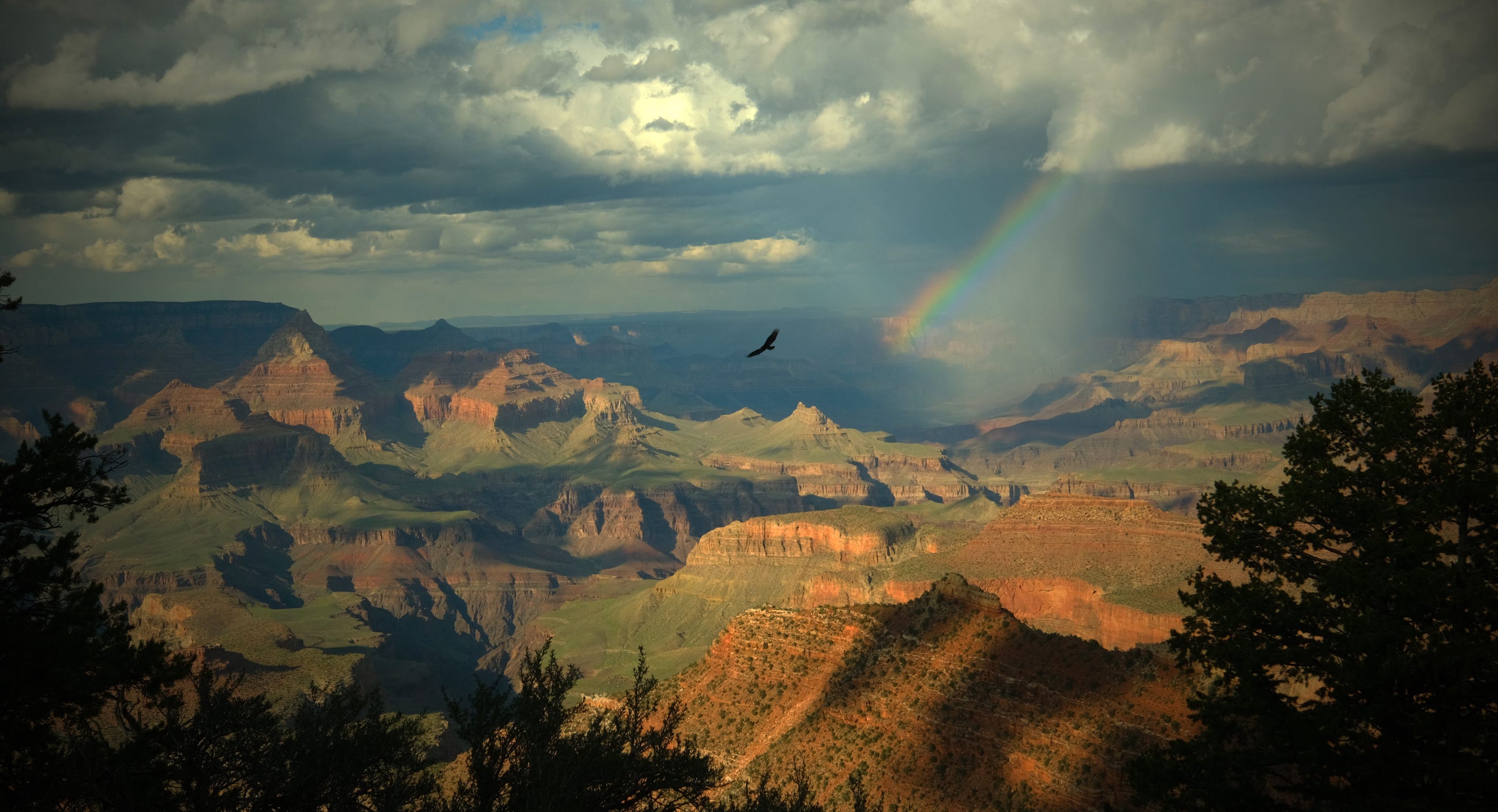
Previously on Between Corners: Doug and Charlotte the property after the storm. They encounter a neighbor, and a surprise.
Doug pointed the Ford into the parking slot assigned to volunteers near Bright Angel Lodge.
He was back. In the Grand Canyon.
In the month since the storm, Doug had repaired the window and roof, cleaned up the property, and stacked two cords of apple and pecan wood – from his property, and Jim Baker’s – next to the smoker to season. He’d finished the new kitchen cabinets, and they were now parked in the Airstream a mile away, at Mather Campground.
Now, two weeks of volunteer work with Preventive Search and Rescue. PSAR. His third season. The role: Keep small problems from becoming big ones. It worked. Rescues in the big park – often requiring a helicopter or other costly exertions – had peaked at 482 in 1996. Unsustainable. The next year PSAR launched, and the rescue numbers started to drop even as park visitation rose.
Here, Doug could hear a sound in his head.
His bell ringing.
He was where he belonged.
And working. At the trailer he put on khaki shorts, Park-Service issue short-sleeve shirt, and a broad-brimmed hat with its round “Volunteer” logo.
Now it was time for what he drily called his “battle rattle.”
Mesh photographer’s vest with six pockets. Radio in a pack pocket, its mic clipped to the vest. White sun sleeves. Pack with six quarts of water, and a gallon plastic bag filled with jerky, Goldfish, Snickers bars, restaurant packets of strawberry jam. Salt, fat, sugar. Health food was useless. It took an hour and a quart of water to activate an ordinary energy bar. A packet of jam delivered 80 calories in a few minutes.
Also, things he might need: A sun umbrella for portable shade. Spare headlamps for anyone benighted. First aid kit, including battle dressings for deep lacerations. Re-labeled Kotex pads, really. But they worked.
He shouldered his off-green pack, grasped his carbon fiber trekking poles, and clacked along the 75 yards to the trailhead. Although it was early, the sun already had force. And of course there was the altitude. People usually took the heat into account. They could see the trails were rough. Altitude? The canyon cut through a flat plain. What altitude?
Yet the South Rim was half as high as 14,410-foot Mount Rainier. Twenty-five percent less oxygen available. Add that to heat, low humidity, brutal trails. Possibly the harshest hiking environment on the planet.
Doug paused at the top of the trail. Tourists crowded around the trailhead, like penguins about to leap from an ice floe. A half-dozen languages. He liked it when people gave him a glance and seemed to acknowledge his authority. He was a volunteer, but they called him “ranger.”
“The ranger said.”
It made his job easier. Because really, all he could do was suggest. Not order. A uniform encouraged them to at least listen.
The bell rang again.
Doug keyed the mic. “Dispatch, Papa Four Nine. In service, Bright Angel to Three-Mile.”
He waited a second. “Papa Four Nine, Bright Angel” came the confirmation.
Down to Three-Mile Rest Hut and back. Seven a.m. until two.
As Doug began his descent, he was quiet for a few minutes. Inhaled the dry air. Clocked the view down the Bright Angel Trail, past the smear of green of Havasupai Gardens, the faint ribbon of trail out to Plateau Point. Beyond that, out of sight, the final plunge to the timeless Colorado River.
Then he started his patter: “Good morning! How are ya? Good hike? How far did you go? Can I get a picture of all of you?”
Most people smiled and answered. A few did not. His antennae had long since become attuned to who wanted to listen to his canyon chatter. And who did not.
He mentally ticked off the waypoints: First Tunnel, with its poster of “Vomiting Victor,” depicting a canyon hiker who had tried to do too much on a hot day. Hitch-Up Corner, where the muleteers stopped to check pack straps on their brown-eyed charges. Heartbreak Hill, a long climbing traverse where tired hikers could see the rim and imagine a cold beer…but not before another hour of hot hard work. Maybe two.
Doug especially liked the spot where the winding trail almost brushed the tawny, 400-foot-thick Coconino layer. Ancient sand dunes. Doug always prefaced his talk about the Coconino with a riddle: “How do you turn wind into stone?”
Answer: The cross-hatched marks on the cliff face showed where ancient dunes reversed on themselves over millions of years.
People liked that.
Ninety minutes later, slowed by conversation, Doug reached Mile-and-a-Half Resthouse. He took a short stop, then hiked the dozen big switchbacks down to the stone hut at Three-Mile Resthouse. There he talked with hikers, ate a bagel and some beef jerky, drank a quart of Liquid IV, took in the ageless view.
Then back up. The heat was building. Texas acclimatization or no, it hit. “Embrace the heat,” Doug said to himself. There was no other option.
By one o’clock Doug was a half mile from the rim, near the top of Heartbreak Hill. Breathing hard. He came across a family. Two adults, two adolescent boys, a slender blonde girl of around eight. British accents.
The girl did not look happy. Face flushed.
“How are you, kid-o?” Doug asked, leaning over.
The mother spoke up. “She’s kind of struggling,” she said. “We went too far.”
Doug looked at the mother, then the girl. “Are you hot, sweetie?” She nodded.
He pulled a small spray bottle from his vest pocket and shook it so she could see that water inside. “How about a little squirt?” he asked. She nodded.
Three cooling sprays to her face and hair. The girl relaxed.
Doug took a water bottle from his pack. Lime electrolyte mix. He offered some, and she drank. Then Goldfish crackers. The saltiest of all the salty snacks. She devoured a handful. A few more misting sprays.
A tentative grin emerged.
Doug heard mom exhale. “My gosh,” she said. “That is the first time she has smiled today.”
Doug stood and put the spray bottle back into his vest. Pointed to a shady spot just up the trail. “Can you stay there twenty minutes?” he asked. “Let her cool off. Then walk out slowly. There’s another ranger coming down soon if you need help.”
Dad spoke up. “We can do that. May I take a picture?”
Doug and the girl posed. Then Doug handed his phone over and knelt beside the girl. This was a keeper.
“Thank you so much.”
“My pleasure. Enjoy the rest of your visit.
At camp, Doug ate a ham sandwich and tried to nap. Too hot. So he grabbed his laptop and drove to the fire station. His boss, Meghan, worked there. Plus, it had air conditioning, Wi-Fi, and a large conference room. He found a spot in the conference room, opened his laptop, and went to work editing a video he’d shot for an online vintage trailer repair event.
After twenty minutes, two male rangers came in. They began sketching on a whiteboard. Doug understood immediately what they were doing. He’d heard the story the previous afternoon.
A BASE jumper had decided to leap from Yavapai Point. Bad idea. Ninety feet down he struck the cliff face, which was nowhere near vertical. He shed his chute. Then his pack. His shoes. Another eight hundred feet, and he struck the flat upper reaches of the Tonto Plateau.
“DRT,” rescuers would say. Dead Right There.
The two rangers mapped out the body recovery. Who managed the rope anchors. Who ran communications. Who had crowd control. Yavapai Point was a popular spot.
Doug stopped editing and watched. He’d taken part in a dozen body recoveries with Seattle Mountain Rescue. He knew the grim drill.
Another ranger came in. The other two looked at him.
“My man!” one said. “You’re our rappeler.”
The unfortunate draftee flinched. “Really?” He knew what it meant: a long down-rap in the hot sun. Chance of rockfall. Then the grim task: Latex gloves and a body bag.
Doug had an impulse and waved a hand. “I’ve done that,” he said. “Put me in.” He was just performing. He knew a volunteer would never be given a task like that.
The rangers laughed. Not derisively. They could see Doug was tanned and reasonably fit and a PSAR volunteer. Could he?
“We’ve got it covered,” said one. “But thanks!”
Doug chuckled softly and went back to his video, “Essential tools for working on vintage trailers.” This sequence: Riveting tools. A typical Airstream might have 5,000 rivets.
After another hour he drove to the village store, then to camp. Dinner was pasta and grilled Italian sausage. A campfire. Dark sky. Bright stars. Some videos on his laptop courtesy his Starlink. He called Charlotte. Told her about the girl. Not the BASE jumper.
Then to bed.
Below Yavapai Point, a man’s body lay amidst the rocks. In Bright Angel Lodge, a tired little girl slept.